
5 Essential Laws of the Charter Business by Sailme Charter
2025-03-03
 Written by Ivan Briukhovets
 Article published on 2025-03-03.
Running a yacht charter business demands precision, efficiency, and a deep understanding of operational dynamics. Years of experience have led us to establish five core principles that drive reliability, customer satisfaction, and long-term success. These guidelines serve as a blueprint for maintaining a well-functioning fleet while ensuring profitability, whether you’re a seasoned professional or new to the industry.
1. Operational costs are inversely proportional to the skills of the technical team
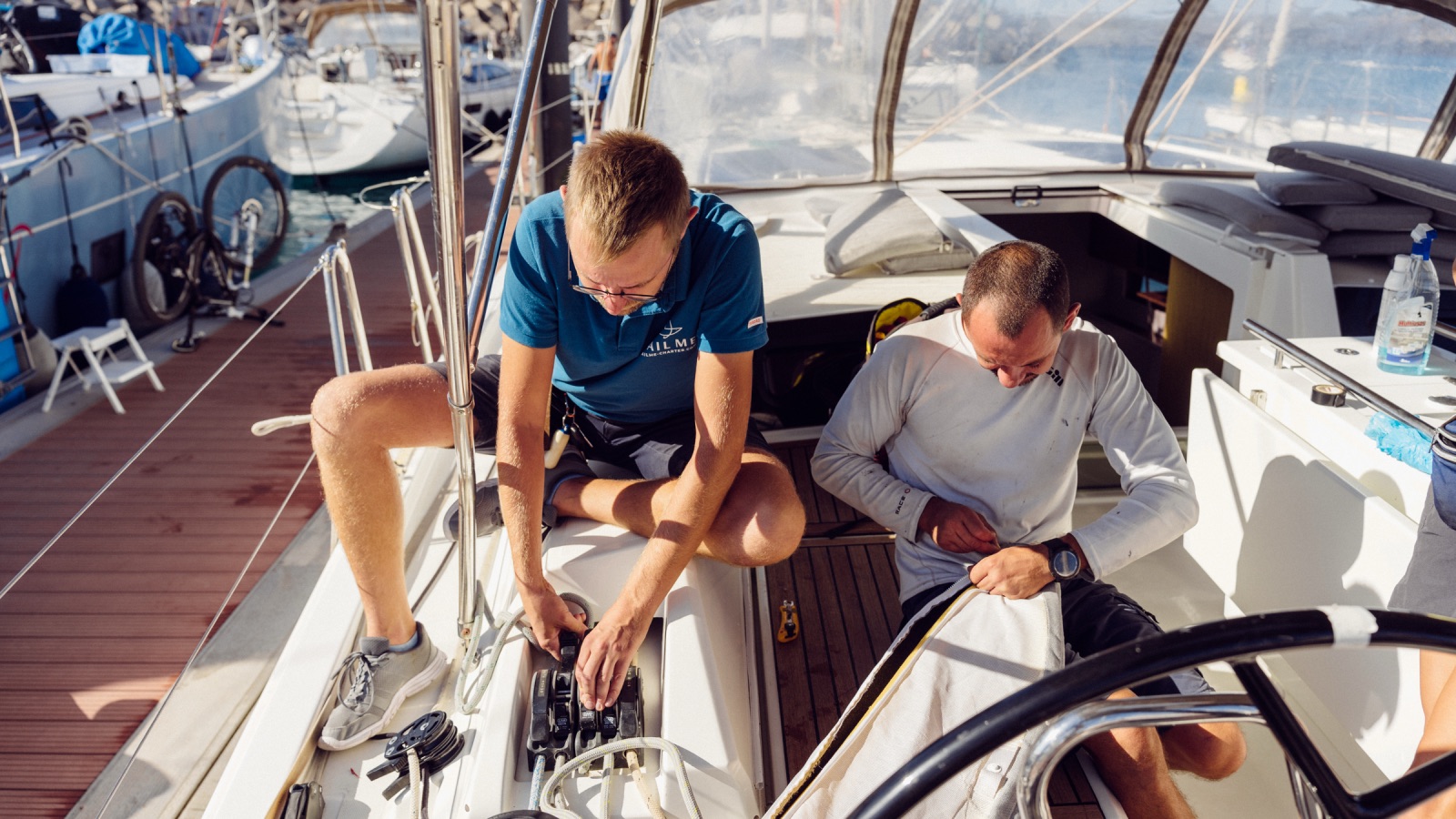
A well-trained technical team significantly reduces maintenance expenses by preventing costly repairs and ensuring smooth yacht operations. Skilled professionals can quickly diagnose and resolve issues, minimizing downtime and keeping the fleet in optimal condition. Regular training and certification upgrades equip technicians with the expertise to handle a wide range of technical challenges.
At Sailme Charter, we carefully select technicians, invest in training and encourage any improvement of existing skills + development of new ones. Examples: diving courses, upgrading the yacht captain's license, powerboat licenses, a knowledge base of major breakdowns. By the way, all our technicians are practicing yacht captains, this gives more understanding and a view from the client's perspective, leading to more effective solutions and a higher standard of service.
2. The number of yachts per technician is directly proportional to the age of the fleet
Fleet size and maintenance efficiency must be carefully balanced to avoid operational bottlenecks. A charter company with an aging fleet requires a lower boats per technician ratio to maintain optimal performance.
To keep SailMe's 21-boat fleet in reliable working order, our technical team consists of 8 people, which is 2.6 boats per technician.
Experience shows that if this ratio exceeds 3, the technical condition of the fleet begins to gradually deteriorate, and any serious accident can put a yacht out of service for a long time, which results in the need to find a replacement, pay penalties, and lose revenue.
3. Charter prices are inversely proportional to the number of available sailing weeks in the region.
Like any business, yacht charter companies need to remain profitable, remain competitive in the market, and grow. Pricing structures are directly related to the dynamics of supply and demand in each region. When the number of available sailing weeks decreases, prices increase due to limited availability. Excess sailing weeks reduce prices.
To ensure that our clients always get the best prices, Sailme Charter reviews our prices every two weeks. This approach allows us to remain flexible and competitive in key sailing regions such as Ibiza, Mallorca and the Canary Islands. By staying ahead of market trends, we offer fair prices, maximising occupancy and revenue.
4. The lower the budget for spare parts inventory, the higher the need for improvisation in emergency repairs
One of the most unpredictable aspects of yacht charter is handling with maintenance issues between charters. We never know what “surprise” clients will bring back from a charter, but we know for sure that it should not affect the next charter.
Stocking an extensive inventory of spare parts instead of relying on last-minute purchases allows for:
- Minimize delays: Repairs can be completed within a 3-4 hour window before the next charter.
- Сonsistent service quality: A well-prepared inventory ensures every yacht is in peak condition for the next client.
- Cost control: Planned purchases prevent costly emergency orders and reduce dependence on delivery times. A proactive approach to spare parts management ensures efficient operations and seamless customer experience. Satisfied clients who return are our reward.
5. Fleet standardization is the key to cost reduction
The efficiency of yacht maintenance and operation is greatly increased when the fleet is standardized. A single selection of yacht models minimizes the variety of spare parts needed and simplifies crew training.
The benefits of a standardized fleet:
- Easier maintenance: technicians become experts in servicing specific yacht models, speeding up repairs and reducing errors.
- Lower spare parts costs: if all anchor winches use the same electric motor, only one spare part is required instead of several versions.
- Operational flexibility: in the event of unexpected problems, a standardized fleet allows for easy replacement of yachts, ensuring that customers always have a comparable alternative.
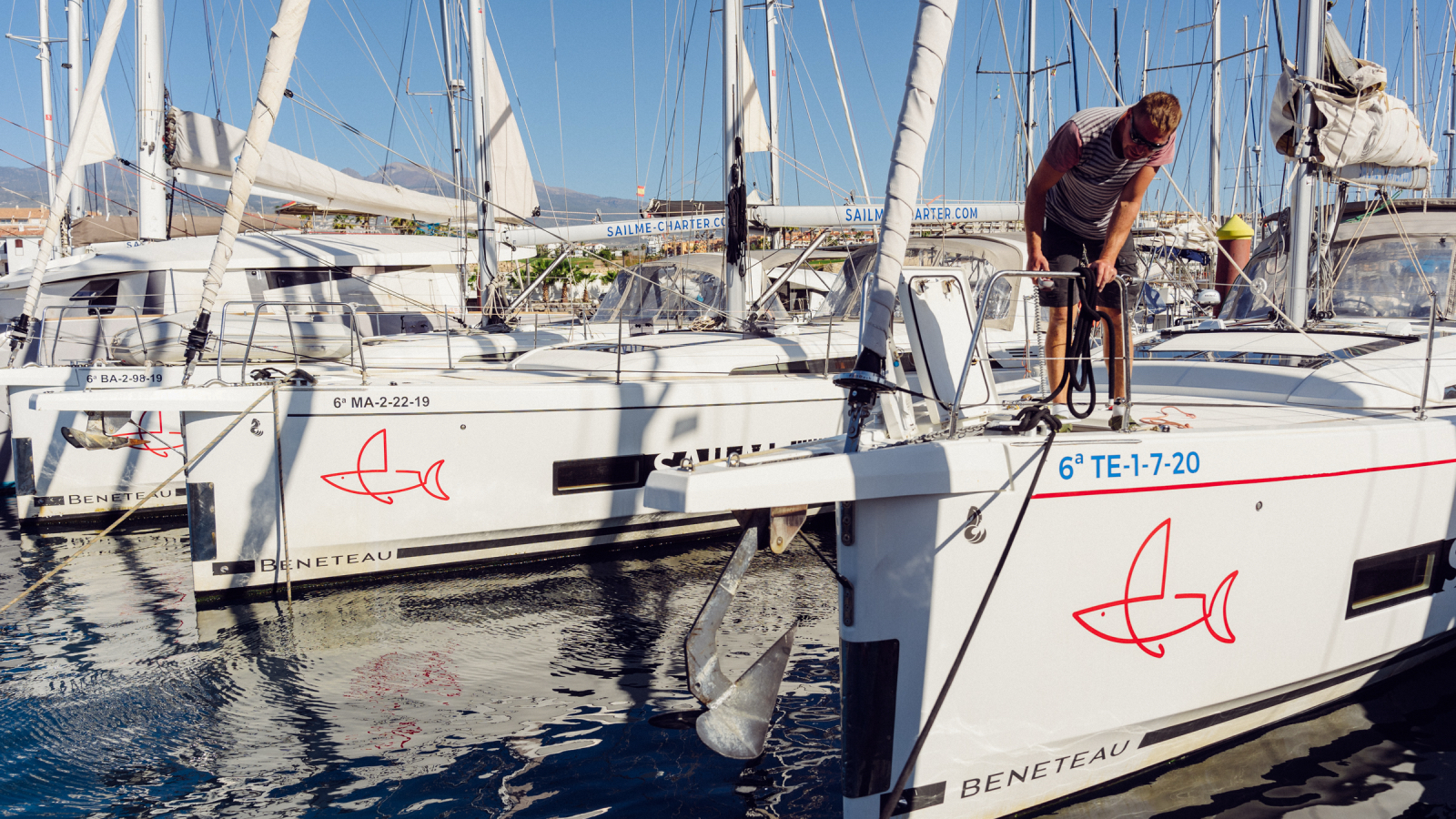
Our fleet includes several Beneteau Oceanis models, including four identical Oceanis 46.1 yachts and four Excess 11 catamarans. This strategy streamlines operations and increases reliability for our customers.
 Running a successful yacht charter business requires a deep understanding of fleet management, pricing dynamics, and operational efficiency. These five fundamental laws ensure smooth operations, high customer satisfaction, and sustainable profitability.
If you're planning a sailing adventure in Ibiza, Mallorca, or the Canary Islands, trust Sailme Charter to provide you with top-quality yachts and professional service.
Contact us today to find the best charter option for your next voyage!


